
DEERE: ONE NAV ACROSS 47 PROPERTIES
Unifying navigation across 47 acquired properties with zero-downtime migration, enabling a single customer view
John Deere had grown its digital business by acquisition: 47 separate web properties, each with its own navigation, none sharing a view of the customer. For a company whose customers buy expensive machines and keep coming back for decades, not knowing what a customer already owned was a revenue problem, not a usability one.
47
Properties Unified
45%
Faster Handoffs (shipped components)
40+
Teams Aligned
Consolidated 47 fragmented properties into one platform, 0 downtime, 40+ teams aligned.
The Strategic Problem
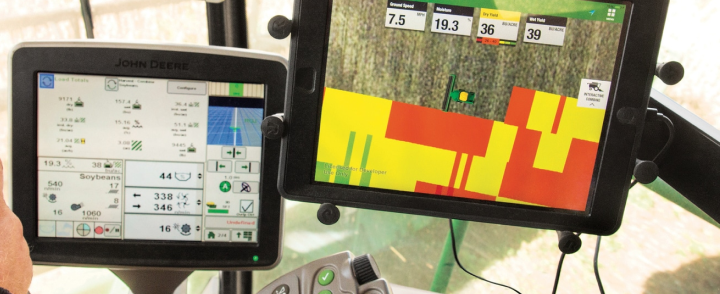
Deere's digital ecosystem had grown organically over 20+ years through acquisitions, resulting in 47 disparate properties with no unified navigation. A farmer using precision ag software had no clear path to parts ordering or financing, hurting adoption and reinforcing siloed perceptions of value.
Visual consistency was the easy part. The hard part was landing one unified experience across independent teams, legacy systems, and multiple brands, without breaking anything in flight.
Why This Was Hard
This wasn't a design refresh. It was organizational coordination at enterprise scale:
- Governance complexity: 40+ product teams with independent backlogs, priorities, and release cycles
- Brand diversity: 6 acquired companies with distinct brand identities and customer expectations
- Technical fragmentation: Legacy systems with varying tech stacks, APIs, and deployment patterns
- Zero tolerance for downtime: Farmers depend on these tools during critical planting and harvest windows
- Cross-platform scope: Web, mobile, and in-cab displays all needed consistent patterns
A top-down mandate would have created resistance. A bottom-up approach would have taken years.
Strategy
We treated this as a governance problem first, design problem second. Our approach:
- Shared Ownership: Established navigation as a cross-team concern with clear roles, not a central team's mandate
- Progressive Adoption: Migrated sites in waves, gathering feedback and iterating between phases, no big-bang rollout
- Value-First Positioning: Framed unification as "unlocking cross-sell and customer satisfaction" not "enforcing consistency"
- Platform Flexibility: Patterns adapted for context (web, mobile, and in-cab displays) while maintaining conceptual coherence
Governance problem first, design problem second. No top-down mandate, no big-bang, shared ownership across 40+ teams, migrated wave by wave, zero downtime.
Execution
Design System as Contract
Built shared navigation components in Figma with clear specs, usage guidelines, and governance processes. Teams could adopt at their own pace, but the contract was clear.
Cross-Functional Alignment
Weekly syncs with engineering, product, and brand stakeholders ensured buy-in and surfaced blockers early. Navigation became a shared language, not a design team deliverable.
Zero-Downtime Migration
Coordinated rollouts with engineering to ensure no customer-facing disruption. Each wave was tested, monitored, and validated before proceeding.
Results
- Consolidated 47 fragmented properties into a single trusted navigation paradigm
- Reduced design-to-development handoff time by roughly 45% on the components that shipped
- Partnered with engineering to sequence rollouts with no customer-facing disruption
- Built the governance model for the enterprise design system used by 6 brands and 40+ teams globally
What This Unlocked
This work created:
- A reusable governance model for future cross-team initiatives
- Customer confidence in Deere as a unified digital platform, not a collection of tools
- Fed the Forced Adoption work as it scaled: unified navigation made cross-product onboarding coherent
The governance model outlived the project. Other cross-team initiatives at Deere now start from it instead of reinventing coordination each time.
Gallery
LET'S TALK
Interested in discussing enterprise design challenges or exploring opportunities?